Deadline: June 15, 2026
The Barbados Implementation Modalities (BIM) under the Fund for responding to Loss and Damage (FRLD) represents a major global financing initiative designed to help developing countries address the devastating impacts of climate change. Through this pilot funding mechanism, countries that are vulnerable to climate-related disasters can access significant financial support to respond to both immediate and long-term losses caused by climate change.
The Barbados Implementation Modalities (BIM) is the first operational funding window of the FRLD and is expected to play a critical role in enabling developing nations to implement climate resilience and recovery initiatives.
With an initial allocation of USD 250 million, the programme provides an opportunity for eligible countries to submit funding requests for projects addressing climate-related loss and damage. This initiative aims to support solutions that are country-driven, context-specific, and focused on protecting vulnerable communities.
In this detailed guide, you will find everything you need to know about the Barbados Implementation Modalities (BIM) funding opportunity, including eligibility, funding amounts, application requirements, submission procedures, and key deadlines.
Overview of the Barbados Implementation Modalities (BIM)
The Barbados Implementation Modalities (BIM) is a pilot funding programme for the period 2025–2026 established by the Board of the Fund for responding to Loss and Damage (FRLD). The programme was created to provide rapid financial support to developing countries experiencing the impacts of climate-induced disasters and environmental changes.
Loss and damage from climate change refers to the economic and non-economic consequences of climate-related events that exceed a country’s capacity to adapt. These impacts often include infrastructure destruction, livelihood loss, ecosystem degradation, and cultural heritage damage.
The BIM programme is designed to address these challenges by providing financial resources that enable countries to implement targeted interventions that support recovery, resilience, and long-term climate adaptation.
The initiative emphasises country-led solutions, meaning that each participating country will define and propose projects that respond to its unique climate vulnerabilities.
Total Funding Available
For its first implementation phase, the Barbados Implementation Modalities (BIM) programme has allocated a total of:
USD 250 million
This funding will be distributed to eligible developing countries through approved funding requests submitted during the call period.
Each approved proposal can request funding within a defined range, allowing countries to implement substantial and impactful climate resilience initiatives.
Funding Amount Per Proposal
Eligible countries can request financial support within the following range:
- Minimum funding request: USD 5 million
- Maximum funding request: USD 20 million
This funding range allows countries to design projects of varying scales, from targeted local interventions to broader national initiatives addressing climate loss and damage.
Types of Climate Impacts the Fund Supports
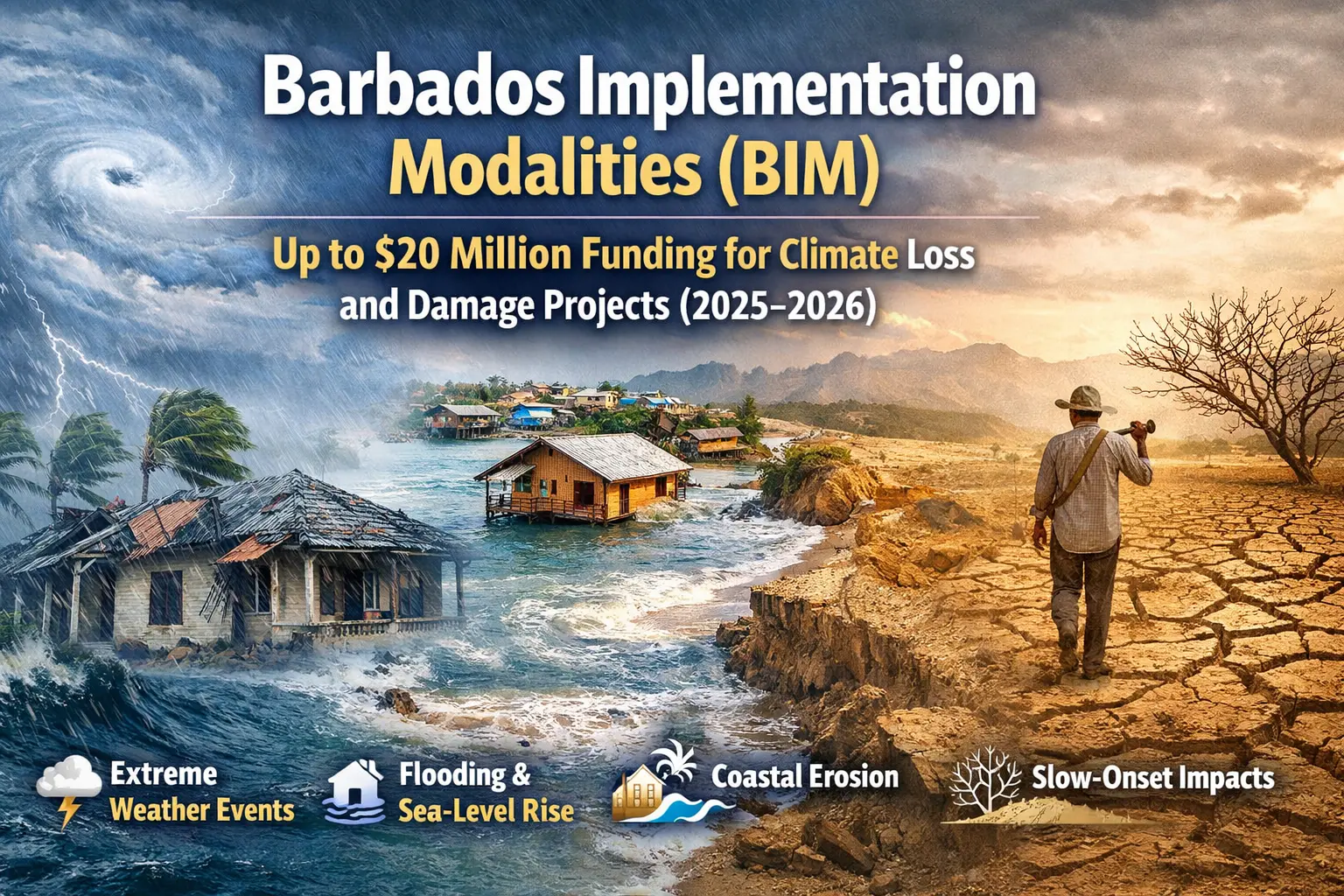
The Barbados Implementation Modalities (BIM) is specifically designed to support projects that address loss and damage caused by climate change. These impacts may arise from both sudden disasters and gradual environmental changes.
Examples of supported climate impacts include:
Extreme Weather Events
Many developing countries face frequent and increasingly severe climate disasters such as:
- Hurricanes
- Cyclones
- Severe storms
- Heatwaves
- Intense rainfall events
Funding can support recovery and resilience initiatives that help communities rebuild and strengthen their preparedness against future disasters.
Flooding and Coastal Impacts
Flooding remains one of the most destructive climate-related hazards globally. Rising sea levels and coastal erosion also threaten coastal communities and ecosystems.
Projects addressing:
- Flood damage recovery
- Coastal protection infrastructure
- Community relocation initiatives
- Coastal ecosystem restoration
may be supported through the programme.
Sea-Level Rise
Sea-level rise presents an existential threat for many coastal and island nations. Funding may support projects designed to mitigate the impacts of rising seas and protect vulnerable populations.
Slow-Onset Climate Events
Climate impacts are not always sudden. Many countries experience gradual environmental changes that slowly undermine livelihoods and ecosystems.
Examples include:
- Desertification
- Land degradation
- Loss of biodiversity
- Water scarcity
- Agricultural productivity decline
The programme recognises the need to support responses to these long-term climate pressures.
Who Can Apply for the Barbados Implementation Modalities (BIM)?
The programme is designed primarily for developing countries that are particularly vulnerable to climate change impacts.
Access to funding can occur through several channels, including:
National Governments
National governments can directly submit funding requests to support projects addressing climate-related loss and damage within their territories.
Subnational or Regional Entities
Subnational governments or regional authorities may also participate, particularly where climate impacts are localised and require region-specific interventions.
Accredited Implementing Entities
Countries may also submit proposals through institutions that are already accredited with major climate financing mechanisms. These may include entities accredited to international climate funds such as:
- The Green Climate Fund
- The Global Environment Facility
- The Adaptation Fund
These entities can help countries design, implement, and manage funded projects effectively.
First Call for Funding Requests
The first official Call for Funding Requests under the Barbados Implementation Modalities (BIM) was launched during COP30 in Belém, Brazil.
This call represents the initial opportunity for developing countries to access funding under the global Loss and Damage financing framework.
The launch marks a major milestone in international climate finance, as it operationalises the Loss and Damage Fund established through global climate negotiations.
Application Timeline
Countries interested in applying must submit their funding requests within the official submission window.
Key Dates
- Call for funding requests opens: 15 December 2025
- Submission deadline: 15 June 2026
Applications submitted after the deadline may not be considered during this funding cycle. Applicants are therefore encouraged to begin preparation early.
Required Documents for Funding Requests
To submit a complete application under the Barbados Implementation Modalities (BIM) programme, applicants must prepare and submit several key documents.
These documents ensure that proposals are comprehensive, transparent, and aligned with the objectives of the Fund for responding to Loss and Damage.
1. Terms of Reference for the Call for Funding Requests
The Terms of Reference outlines the overall guidelines governing the funding call. It provides detailed instructions on eligibility, proposal preparation, evaluation criteria, and submission requirements.
Applicants are strongly advised to review this document carefully before preparing their proposal.
2. Funding Request Template
All applications must follow the official Funding Request Template provided by the programme. This template ensures that proposals present information in a standardised format that facilitates evaluation.
The template is available in multiple languages, including:
- English
- French
- Spanish
However, applicants should note an important requirement regarding submission language.
3. Guidance for Preparing Funding Requests
This guidance document provides detailed instructions on how to complete the funding request template and develop a strong project proposal.
It includes information on:
- Project design
- Financial planning
- Monitoring and evaluation
- Implementation arrangements
Following this guidance increases the chances of submitting a high-quality proposal.
4. Letter of Endorsement Template
Each application must include an official Letter of Endorsement from the relevant national authority.
This letter confirms that the proposed project has the support of the country’s government and aligns with national climate priorities.
Language Requirements
Although some application templates are available in multiple languages, the programme currently requires that:
All funding requests must be submitted in English.
Applicants should therefore ensure that their proposals are written clearly and professionally in English before submission.
How to Submit Your Funding Request
Completed funding requests must be submitted electronically via email.
Applicants should ensure that all required documents are included in the submission package and that the proposal follows the official template and guidance provided.
Submissions are reviewed by the FRLD Secretariat before proceeding to evaluation.
Contact for Application Submission
Funding requests should be submitted via email to:
Applicants should carefully follow submission instructions to ensure their application is successfully received and processed.
General Enquiries
For general enquiries about the programme, applicants may contact the FRLD Secretariat through the following email address:
This contact point can provide clarification regarding programme requirements, eligibility, or documentation.
Importance of the Loss and Damage Fund
The Fund for responding to Loss and Damage (FRLD) represents one of the most significant developments in global climate finance.
For many years, developing countries have advocated for dedicated funding to address climate-related losses that go beyond adaptation capacity. The creation of this fund acknowledges the urgent need for financial support to help vulnerable nations respond to climate disasters.
The Barbados Implementation Modalities (BIM) serves as the first operational funding window of this global initiative.
By providing targeted financing for climate loss and damage responses, the programme supports countries in:
- Rebuilding communities after climate disasters
- Protecting vulnerable ecosystems
- Strengthening climate resilience
- Addressing long-term environmental degradation
The programme also emphasises country ownership, ensuring that funded projects align with national priorities and development strategies.
Why Countries Should Apply
Developing countries facing severe climate impacts have a unique opportunity to secure significant funding through this programme.
Key benefits include:
Significant Financial Support
With funding requests of up to USD 20 million per project, the programme enables countries to implement meaningful climate response initiatives.
Flexibility in Project Design
Countries can propose projects that address their specific climate challenges, whether related to disaster recovery, ecosystem restoration, or community resilience.
Support for Vulnerable Communities
The programme prioritises initiatives that benefit communities most affected by climate change.
Alignment with Global Climate Goals
Projects funded through the programme contribute to global efforts to address climate change impacts and support sustainable development.
Preparing a Strong Funding Proposal
Given the competitive nature of international climate funding, preparing a well-structured proposal is essential.
Successful applications typically demonstrate:
- A clear understanding of the climate loss and damage challenge
- Strong project design and implementation plans
- Evidence of national government support
- Measurable outcomes and impact
- Robust financial planning and accountability mechanisms
Applicants should ensure that their proposals align closely with the programme’s objectives and evaluation criteria.
Final Thoughts
The Barbados Implementation Modalities (BIM) represents a major opportunity for developing countries to access international funding for addressing the devastating impacts of climate change.
With USD 250 million available in the first funding cycle, the programme offers substantial financial resources to support projects that strengthen resilience, restore livelihoods, and respond to climate-related loss and damage.
Countries that prepare strong proposals aligned with national climate priorities stand a strong chance of securing funding and implementing impactful projects that protect vulnerable communities.
Application Links
Contact us for proposal drafting, refining and review.