


Deadline: November 24, 2025
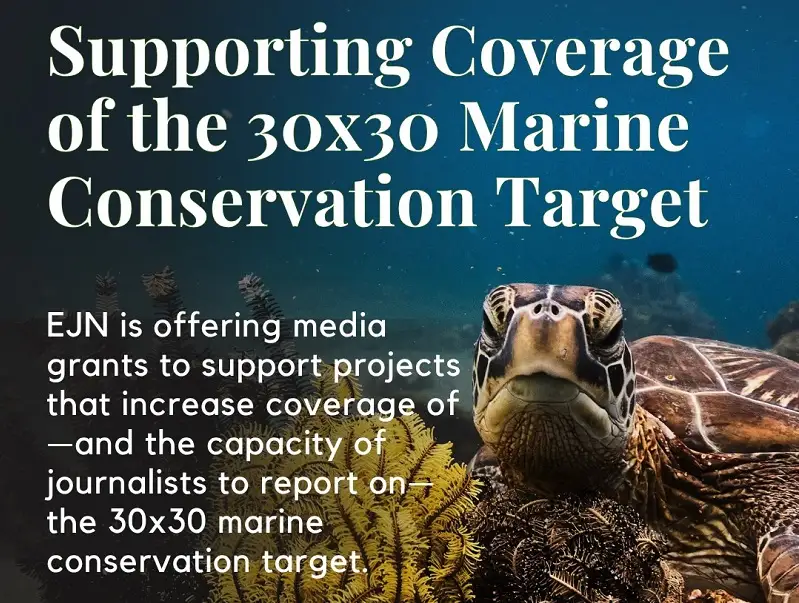
The Media Grants to Support Coverage of Countries’ Progress Toward the 30×30 Marine Conservation Targets provide funding to strengthen media reporting on global efforts to protect 30% of marine and coastal ecosystems by 2030. These grants support in-depth journalism, newsroom capacity building, and innovative storytelling about marine conservation. The initiative aims to deepen public understanding, enhance accountability, and highlight the challenges and opportunities countries face while working toward the 30×30 goal. The Media Grants to Support Coverage of Countries’ Progress Toward the 30×30 Marine Conservation Targets are ideal for media organisations committed to impactful environmental journalism.
About the Opportunity
This opportunity supports media organisations in coastal countries to deliver high-quality, evidence-based reporting on the implementation of 30×30 marine conservation commitments. The grants fund story production, investigative journalism, solutions-driven content, multimedia storytelling, and capacity-building activities such as training and knowledge sharing.
Topics of focus include:
- National policies and financial commitments toward the 30×30 target
- Effectiveness and enforcement of Marine Protected Areas (MPAs)
- Impacts of industrial fishing, shipping, and illegal, unreported and unregulated (IUU) fishing
- Roles and rights of Indigenous Peoples and local communities
- Use of conservation technology such as satellite imaging, eDNA, AI, and remote sensing
- Marine governance, negotiations, and international cooperation
Cross-border projects, innovative media formats, and investigative approaches are strongly encouraged.
Eligibility
To qualify, applicants must:
- Be media organisations or newsrooms located in a coastal country
- Be registered entities such as newspapers, online platforms, radio stations, television broadcasters, multimedia organisations, or media collectives
- Submit applications in English (produced content may be in any language)
- Provide transparent disclosure of any AI use in the proposal
- Demonstrate experience in environmental reporting or relevant beats
Not eligible: NGOs, academic institutions, and civil society organisations unless operating as genuine media organisations.
Benefits / Award Details
- Grant amount: USD 10,000 per selected organisation
- Expected number of awards: Five (5)
- Duration: Six-month project implementation period
- Funding may support: reporting costs, training programmes, multimedia production, travel, technology use, and limited equipment purchases (with strong justification)
- Co-financing is allowed but not required
- Published content must acknowledge support from the initiative
- Grantees agree to allow editorial review and distribution of their outputs by the organisers and partners
Application Requirements / Documents
Applicants must prepare:
- A detailed project proposal outlining objectives, approach, target audience, outputs, and timeline
- A well-justified budget using the required template
- Organisational profile and evidence of past reporting work
- Explanation of any AI-assisted processes used in proposal development
- Plans for dissemination and audience reach
- Monitoring and evaluation approach
Timeline / Key Dates
- Application Deadline: 24 November 2025, 11:59 PM (Pacific/Niue time)
- Project Start: Early 2026
- Project Duration: Six months
Priority consideration may be given to organisations based in Ghana, Mexico, and the Philippines, alongside two additional coastal-country organisations.
How to Apply
Applicants must complete the online application form and upload all required documents through the official submission portal. Projects may be single-country or cross-border. Joint applications from multiple media partners are allowed but must designate a lead organisation.
Selection Process
Applications will be evaluated based on:
- Relevance to 30×30 marine conservation priorities
- Quality, depth, and originality of the proposed journalism
- Organisational capacity and track record
- Innovation in storytelling or project structure
- Feasibility and impact potential
- Budget clarity and cost-effectiveness
- Geographic diversity and representation of coastal regions
Additional Information / Terms
- All published content must include a disclaimer acknowledging support from the programme.
- Submitted materials and final outputs may be edited, published, and redistributed by the organisers.
- Projects must adhere to ethical journalism standards and responsible reporting practices.
- Grantees must provide narrative and financial reports at the end of the project period.
Host Organisation
The programme is facilitated by a global environmental journalism initiative committed to strengthening media coverage of environmental issues, enhancing newsroom capacity, and improving public access to high-quality environmental information.
contact us for proposal drafting, refinning and review
