


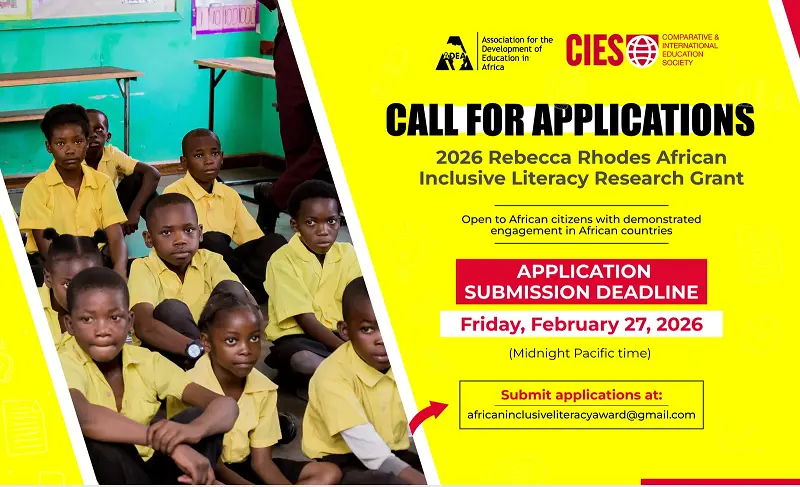
Deadline: February 27, 2026
The Rebecca Rhodes African Inclusive Literacy Research Grant 2026 is a prestigious award established to support African scholars and practitioners in conducting impactful, locally grounded research aimed at improving foundational literacy learning for children and youth with disabilities across Africa. This initiative honors the legacy of Rebecca H. Rhodes, a renowned leader in inclusive education, by empowering African researchers who are dedicated to advancing inclusive literacy practices and educational equity on the continent.
About the Grant
The Rebecca Rhodes African Inclusive Literacy Research Grant 2026 provides financial support to African researchers seeking to generate practical, evidence-based solutions that enhance literacy education outcomes for children and young people with disabilities. Through this program, researchers are encouraged to explore innovative approaches to inclusive education and contribute valuable insights to literacy development in Africa.
This grant is a collaborative effort between the Association for the Development of Education in Africa (ADEA) and the Comparative and International Education Society (CIES), reflecting a strong commitment to promoting educational inclusion and literacy advancement across the continent.
Grant Value
Successful applicants will receive a grant of up to USD 5,000 to support research-related expenses. The funding is intended to enable researchers to carry out high-quality, localized studies that align with the objectives of inclusive literacy and educational development.
Eligibility Criteria
Applicants must meet the following requirements to be considered for the Rebecca Rhodes African Inclusive Literacy Research Grant 2026:
- Must be a citizen of an African country.
- Must either reside in Africa currently or have spent at least two weeks in an African country within the past 24 months and demonstrate a clear plan to work in Africa within the next one to two years.
- The proposed research must be conducted in West, East, Central, or Southern Africa.
- Applications may be submitted in English or French.
The grant is open to scholars, educators, and practitioners who are passionate about inclusive literacy and are ready to produce research that drives real-world change.
Research Focus
The focus of this grant is on inclusive literacy research—studies that explore strategies to improve literacy teaching and learning for children and youth with disabilities or special education needs. Applicants are encouraged to design research that emphasizes foundational reading and writing skills, and that has clear implications for policy, classroom practice, or community engagement.
Awarded projects are expected to be completed and disseminated within 18 months of receiving the grant.
Application Process
Applicants must compile all required materials into a single document (Microsoft Word, Google Doc, or PDF format). This document should contain all necessary components of the research proposal and supporting information as outlined in the grant call.
Completed applications should be submitted via email to:
📩 africaninclusiveliteracyaward@gmail.com
Key Dates
- Application Deadline: February 27, 2026
All applications must be received by this date. Late submissions will not be considered.
Organizers and Partners
The Rebecca Rhodes African Inclusive Literacy Research Grant 2026 is jointly organized by the Association for the Development of Education in Africa (ADEA) and the Comparative and International Education Society (CIES). Both organizations are deeply committed to advancing inclusive and equitable education throughout Africa through research, collaboration, and knowledge exchange.
Conclusion
The Rebecca Rhodes African Inclusive Literacy Research Grant 2026 offers a remarkable opportunity for African researchers to make meaningful contributions to inclusive literacy education across the continent. By providing funding, recognition, and academic support, this initiative continues Rebecca Rhodes’ legacy of championing equitable learning for all children—especially those with disabilities.
👉 Read More About the Programme
Contact us for proposal drafting, refining, and review.
